Disclosure: Some links in this article are affiliate links. If you buy through them we may earn a small commission at no extra cost to you. It does not change what we recommend.
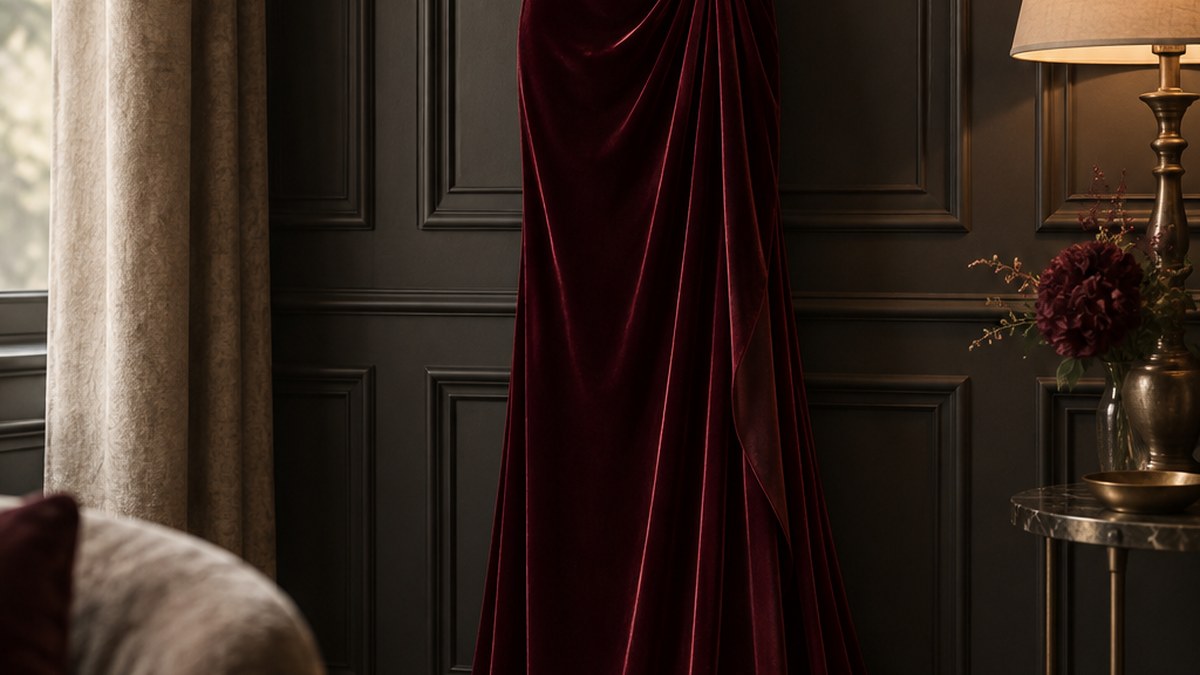
An occasion dress is the purchase where fast fashion makes the most sense and goes wrong most often. Most sense, because you will wear it two or three times and spending three figures on that is questionable maths. Most often, because occasion dresses are the category where fabric and construction are doing the visible work, and those are the two things a $25 dress is cutting.
The gap between a cheap dress that photographs beautifully and one that photographs cheaply is narrow, specific and entirely learnable.
Quick verdict
Buy for how the fabric behaves under a camera flash, not for how the dress looks in the studio shot. Matte, weighty fabrics — crepe, ponte, heavy jersey, velvet — read as expensive in photographs. Thin polyester satin does not, because it catches light in a way that announces its price. Order two sizes in one order so the free first return covers the miss, and check the lining, because an unlined occasion dress is a sheer dress waiting for a flash.
The flash test, which is the whole game
Wedding and party photographs are taken in low light with a flash, or in a dim room with a phone. Both conditions punish shiny fabric.
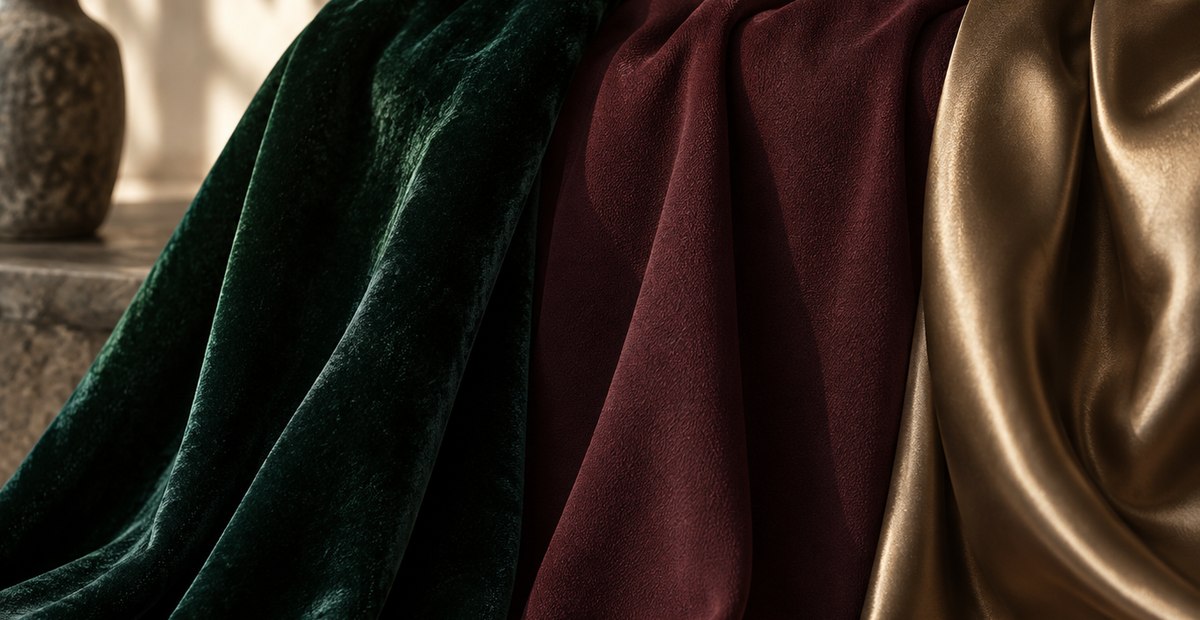
Polyester satin — the default fabric for cheap occasion dresses — has a high, hard sheen that blows out under direct light. The result is the specific look everyone recognises and nobody wants: a bright white patch across the bust and a flattened silhouette.
What photographs well, in rough order:
- Crepe. Matte, slight texture, hangs with weight. The single most reliable occasion fabric at this price.
- Velvet. Absorbs light entirely, which is the opposite problem to satin. Reads as expensive almost regardless of cost.
- Heavy jersey and ponte. Matte, forgiving on fit, good for a column silhouette.
- Sequins and embellishment. Counterintuitively good, because the eye reads sparkle as intentional rather than as cheap sheen. Check the reviews for shedding.
- Chiffon over a lining. Fine, provided the lining exists.
What to avoid: thin satin, anything described as “silky” without a fibre to back it up, and stretch lace over nude lining, which is the other combination that never survives a flash.
Check the lining before anything else
This is where cheap occasion dresses actually fail, and the listing usually tells you if you look.
An occasion dress with no lining is a dress that is see-through under a flash and clings in every direction. Listings will sometimes state “lined” in the details; more often you find out from the customer photographs and the reviews. Search the review text for “sheer”, “see through” and “had to wear a slip”.
The related check: a fully lined dress will hang away from the body and swing. An unlined one clings to tights and rides up when you sit down, which you will be doing for most of a wedding.
Silhouettes that survive a cheap make
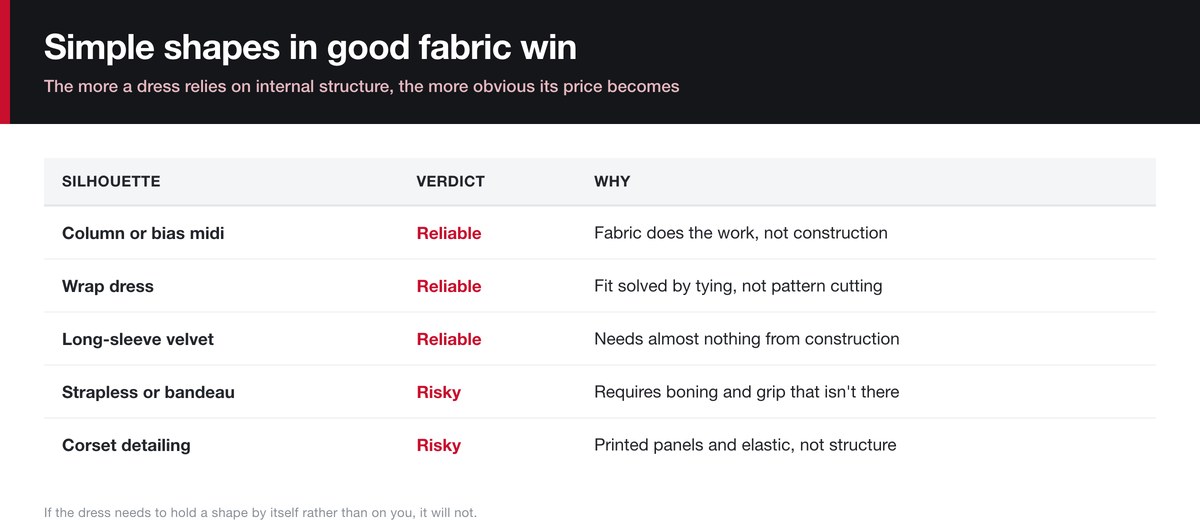
Construction complexity is where money shows. The more a garment relies on internal structure, the more obvious its price becomes.
Reliable: a column or bias-cut midi in crepe; a wrap dress, where the fit is solved by tying rather than by pattern cutting; a simple A-line with a defined waist; a long-sleeve velvet dress, which needs almost nothing from construction.
Risky: strapless and bandeau anything, which requires boning and grip that is not there. Corset detailing, which at this price is printed panels and elastic rather than structure. Fit-and-flare with a stiff skirt, which needs weight in the hem to hang. Anything with a built-in cup.
The heuristic: if the dress needs to hold a shape by itself rather than on you, it will not.
The colours, and the one rule that is not negotiable
For a wedding: not white, not ivory, not cream, not champagne, not “blush” that reads as white in photographs. This is the one rule that genuinely matters and the one most often broken by accident, because a colour that looks clearly pink on a phone screen can wash out to near-white under a marquee light. If you are uncertain, you have your answer.
Beyond that, autumn/winter 2026 is running heavily to plum and berry tones, which move straight from the collections into party dressing and are easy to find cheaply this season. Deep green and burgundy photograph well in low light for the same reason velvet does — saturated, matte colours hold their depth under a flash where pastels go chalky.
Black is always correct and slightly more interesting in a texture — velvet, crepe with a subtle weave — than in flat polyester.
Order early, order two sizes, and time the return window
This is the practical part, and occasion dressing is where the timing bites.
Order at least three weeks before the event. Standard international delivery routinely runs one to three weeks depending on where the item ships from, and an item held in a domestic warehouse is far quicker than one crossing a border. Express exists but the cost rarely makes sense on a $30 dress.
Order two sizes in the same order. The first return from an order is free and can hold several items, so the second size costs you nothing but a trip to the post office. Ordering them separately, a day apart, means paying a return fee for the privilege of having thought about it.
Then check the return window against the event date. Most returns run 30 days from delivery, but marketplace listings from third-party sellers set their own window, which can be shorter. If the wedding is five weeks out and the window is fourteen days, you are deciding before the event whether to keep it — which is fine, as long as you know that going in.
What to do when it arrives
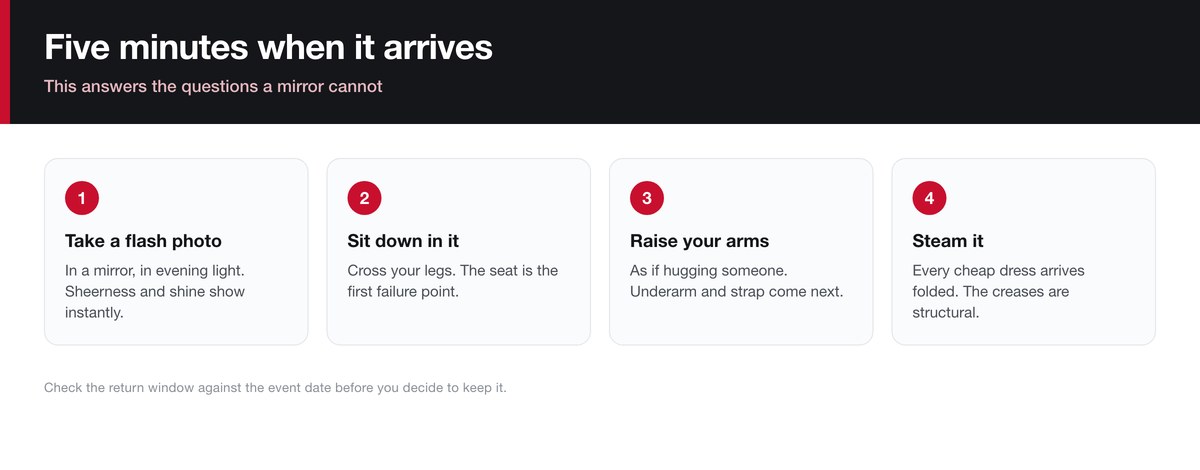
Try it on in the evening, in the light you will actually be photographed in, and take a flash photo of yourself in a mirror. That single photograph answers the sheerness question, the shine question and the fit question at once, and it answers them the way the wedding album will.
Then sit down in it. Cross your legs. Raise your arms as if hugging someone. Occasion dresses fail at the seat, the underarm and the strap, in that order, and all three failures show up in ninety seconds of moving around.
If it passes, steam it — every cheap dress arrives folded into a bag and the creases are structural — and hang it somewhere you will not forget it.
Notes and sources: SHEIN US shipping and return policy pages, including the per-listing return windows applied to third-party marketplace items, checked September 2026; autumn/winter 2026 colour trend reporting from Who What Wear and Woman & Home. Delivery estimates vary considerably depending on whether an item ships from a domestic or international warehouse.
