Travel · Editorial · 2026
In an era when most carriers compete on price points and schedule fragments, one airline still treats long-haul travel as a craft. After three decades of awards, an evolving fleet, and a service culture that has quietly become a global benchmark, Singapore Airlines remains less a flight option than a statement of intent.
There is a particular hush that settles over a Singapore Airlines cabin as the boarding doors close. It is not silence — there is the gentle ambient music, the soft clink of a champagne flute being readied, the faint rustle of a fresh-pressed linen napkin being unfolded by a passenger across the aisle. It is, instead, the sound of intention. A space that has been considered down to the millimetre. A service philosophy in which nothing is incidental.
This is the quiet mastery that has, for nearly fifty years, made Singapore Airlines the airline against which others are measured. Not the loudest. Not always the largest. But, by almost every meaningful metric — passenger surveys, industry awards, on-time reliability, fleet modernity — among the most consistent.
A Legacy Built on Standards, Not Slogans
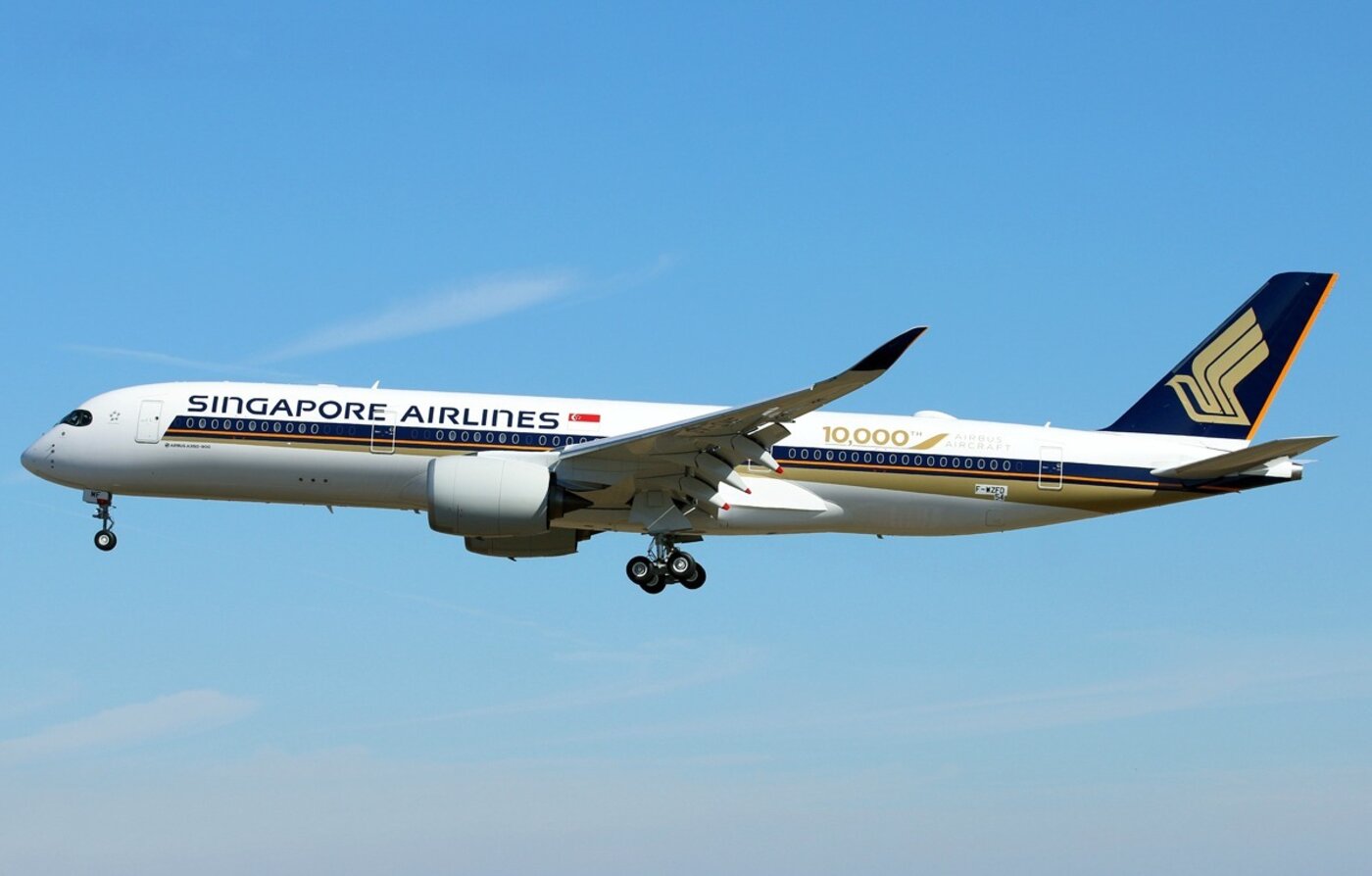
It would be easy to ascribe Singapore Airlines’ reputation to glossy advertising or the famous Singapore Girl image — an icon now four decades into its identity. But spend any meaningful time in the airline’s cabins and a different truth emerges: the brand is sustained by an internal culture that approaches service as a discipline.
The training programme at the airline’s Ang Mo Kio campus runs for nearly four months — among the longest in the industry. Crew members rehearse not only safety procedures and food service, but the choreography of an entire flight: how to read the rhythm of a cabin, when to offer a refill before being asked, how to anticipate the small needs of a passenger settling in for fourteen hours over the Pacific.
This is a difficult thing to manufacture. It is also a difficult thing to imitate.
“Quality is the result of a thousand small decisions, repeated until they become culture.”
The Suites — and What They Quietly Reveal
Few products in commercial aviation have been studied as closely as Singapore Airlines’ Suites class. Located at the front of the airline’s A380 fleet, each suite is a private cabin in the truest sense — a sliding door, a separate bed and chair, a hand-stitched leather armchair from Poltrona Frau, and on certain pairs of suites the option to combine into a double bedroom in the sky.
What is striking is not the lavishness, exactly. The hardware is, of course, beautiful. The mood lighting transitions through the flight to ease circadian disruption. The bedding is by Lalique. The amenity kits are co-designed with quietly storied luxury houses. But the deeper signal sent by the Suites is one of restraint: an understanding that true luxury is not a maximalism of features but a careful editing of the experience.
The Suites are not the only place this philosophy plays out. Business Class, Premium Economy, and Economy each receive the same care of consideration — different in scale, identical in intent. The mattress in Business folds out flat with a properly tailored topper. Premium Economy serves wines from the airline’s curated cellar. Even Economy is offered “Book the Cook,” a complimentary pre-order menu drawn from chefs across Asia.
A Network That Reflects a Philosophy
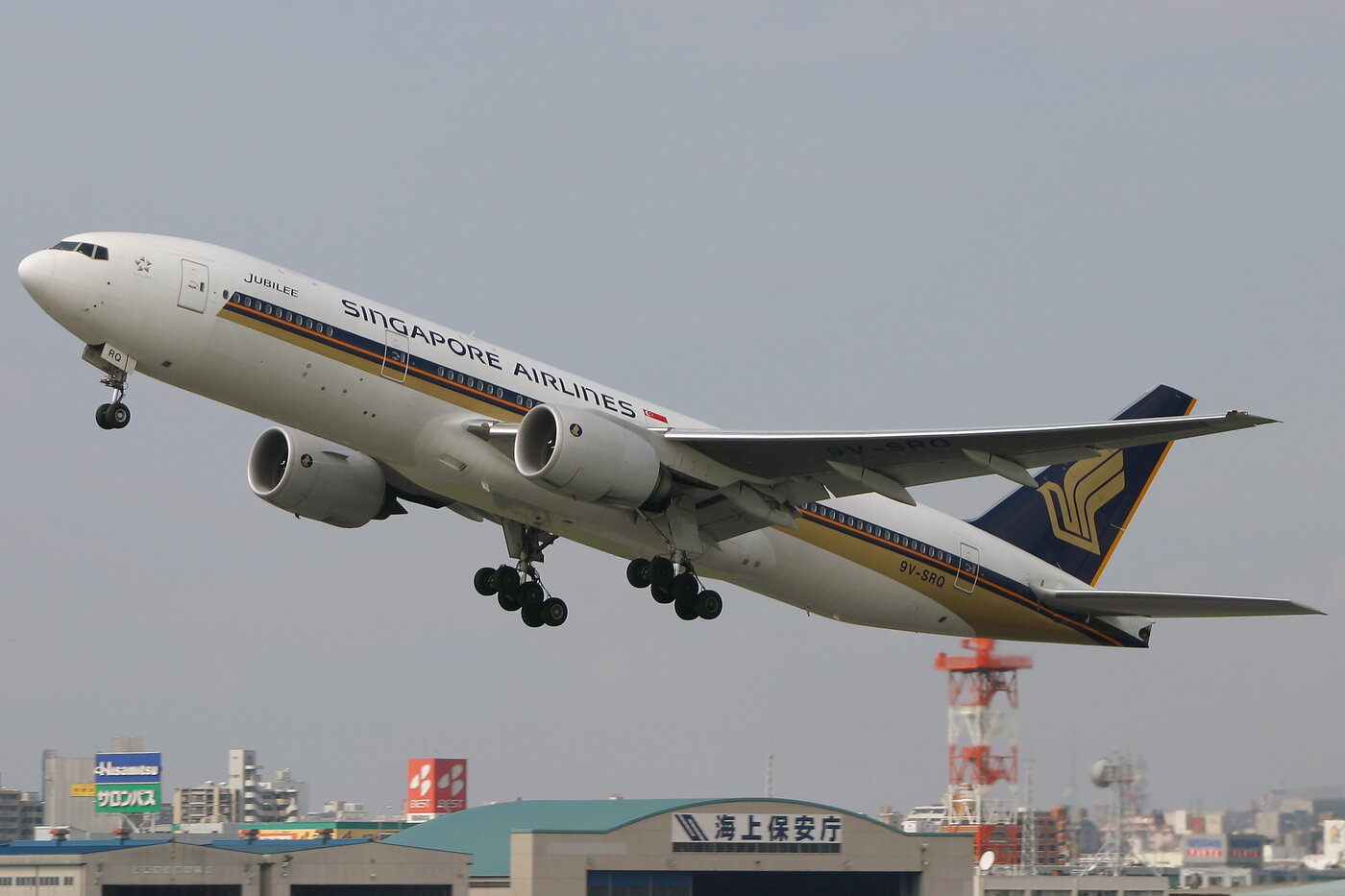
Singapore Airlines flies to over 130 destinations across more than 35 countries — a network that, at first glance, looks merely large. Studied closely, it reads as a thesis: the carrier serves nearly every commercial centre that matters in the modern global economy, plus a careful selection of leisure markets, all routed through the architectural marvel that is Changi Airport.
The non-stop service from Singapore to New York — at over eighteen hours, among the longest commercial flights in the world — is itself a kind of statement. It is operated by the Airbus A350-900ULR, configured exclusively in Business and Premium Economy. There is no Economy cabin. The route exists for travellers for whom time is the scarce resource, and the airline makes no apology for designing toward that audience.
Equally telling is the relationship with Scoot, the airline’s low-cost subsidiary. Rather than confuse the parent brand with discounting, Singapore Airlines built a separate carrier with its own identity, its own cabin product, and its own customer base. The mainline experience remains undiluted.
Sustainability — Spoken Quietly, Acted On Visibly
Few carriers in 2026 are as discreet about their sustainability narrative — and yet as substantive in their actions — as Singapore Airlines. The fleet is among the youngest of any full-service global airline, with an average age in the single digits. New A350s, 787s, and the incoming 777-9 displace older, thirstier aircraft on a deliberate cadence.
The airline has committed to a five-percent sustainable aviation fuel target by 2030, partnered with Singapore-based research institutes on next-generation biofuel feedstocks, and adopted a carbon offset scheme integrated directly into the booking flow — without making the topic a marketing centrepiece. There is something almost characteristically understated about this: the work is done because it is the work, not because it is the campaign.

Awards as Measurement, Not Decoration
Singapore Airlines has held the Skytrax World’s Best Airline title five times — most recently in 2023 — and is a near-permanent fixture in every credible Top 5 list since the early 2000s. The carrier is similarly decorated for cabin staff, in-flight catering, and premium cabin product, by both Skytrax and AirlineRatings.
What is interesting is how the airline communicates these awards: factually, briefly, almost in passing. There is no boastful press apparatus. Press releases tend to read more like operational updates than self-congratulation — fleet additions, network changes, partnership announcements. The accolades are noted because they are part of the public record. They are not the point.
A Brief Record
- 5 × Skytrax World’s Best Airline winner
- Founded 1972 — flag carrier of Singapore
- 130+ destinations, 35+ countries
- One of the youngest mainline fleets in the industry
- Hub: Changi Airport, repeatedly named the world’s best
KrisFlyer and the Long Game
The carrier’s loyalty programme, KrisFlyer, sits inside Star Alliance and represents a genuinely useful currency for the long-haul traveller. Award seats remain available — including in premium cabins — to a degree that has become rare among major frequent flyer programmes. Status earned across Star Alliance partners is honoured cleanly, with the kind of operational discipline you would expect from the wider airline.
For the traveller who flies internationally several times a year, the case for cultivating a relationship with Singapore Airlines extends well beyond any one journey. The miles compound, the recognition deepens, and the small upgrades — a better seat assignment, an earlier boarding call, a moment of attentive service — accumulate into something that feels less like a transaction and more like a long-term acquaintance with a particular standard of travel.
A Closing Thought
The airline industry tells you a great deal about the broader culture it serves. In the years when air travel was framed as adventure, carriers competed on glamour. In the years it became commodity, they competed on price. Today, increasingly, what passengers seem to want is something rarer — the sense that someone, somewhere, has thought carefully about their journey on their behalf.
Singapore Airlines has been preparing for this moment for half a century. The cabin doors close. The lights dim. The first course is set. And the world quietly slips by, thirty-eight thousand feet below.
Continue The Journey
Explore destinations, fares, and the latest from one of the world’s most consistently celebrated carriers.
An editorial reflection. Not affiliated with Singapore Airlines.
